
The first visit
The first visit is about getting comfortable: your child sees the surgery, the dentist explains what will happen in words they understand, and we do nothing more than a gentle look.
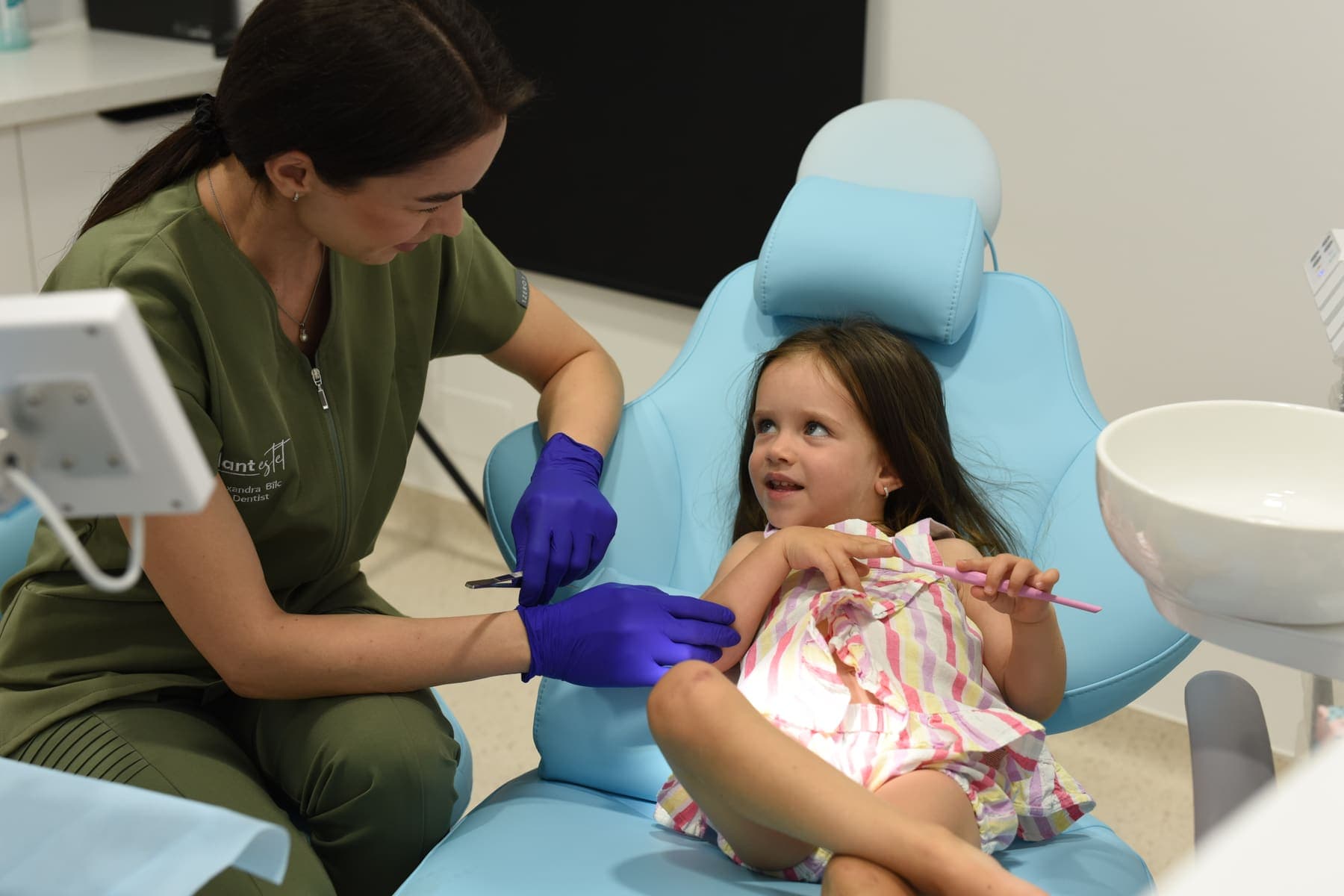
Dentistry for children, somewhere calm and unhurried: prevention, gentle check-ups and treatment explained in words they understand — so that going to the dentist never becomes something to dread.
Paediatric dentistry covers children from the first tooth through to adolescence. Beyond the treatment itself, its most important job is to build a good relationship with the dentist: a child who arrives relaxed for a check-up will look after their teeth for life.
We work at the child’s pace. The first visit is for getting comfortable, with no procedures: they see the surgery, sit in the chair, and the dentist explains what comes next in words they understand. Nothing happens by surprise or by force.
A word to parents:avoid words like “pain”, “injection” or “it won’t hurt” before the visit — they introduce a fear the child was not carrying. Present it as someone counting their teeth, and leave the rest of the explaining to us.
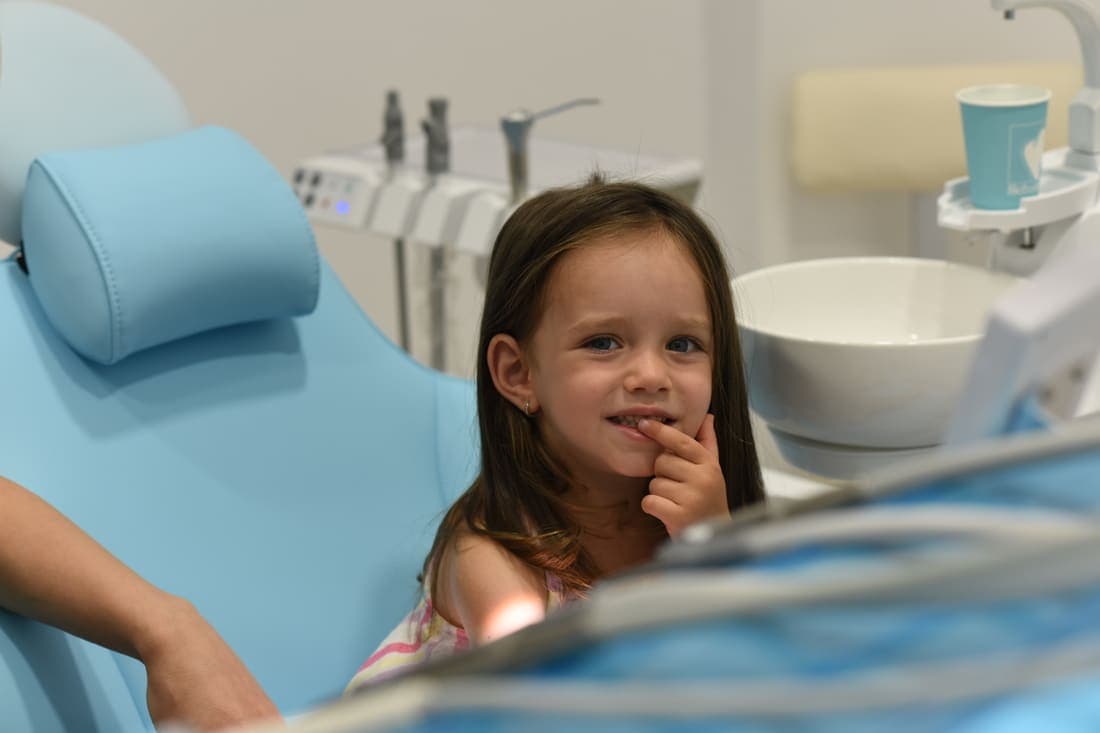
Brushing twice a day with an age-appropriate fluoride toothpaste, cutting down sweets between meals, and a check-up every six months prevent most decay. Sealants and fluoride finish that routine off, and anything found early is settled simply and quickly.
Around age seven a first orthodontic assessment is also worth having, to see early how the jaws are growing and how the teeth are lining up.
See orthodontic treatmentIdeally around their first birthday, or within six months of the first tooth appearing. That first visit is about familiarity and prevention, and early check-ups get a child used to the surgery without fear.
Baby teeth hold the space for the permanent ones, and they matter for chewing and for speech. An untreated cavity hurts, can become infected, and can damage the permanent tooth bud underneath; losing a tooth too early leads to crowding later.
We go at the child's pace. The first appointment is for getting acquainted, we explain each step in plain words, and we never force a procedure. The trust built in those first visits is what makes everything afterwards easy.
A sealant covers the deep grooves on the biting surface of the molars with a protective material, keeping food debris and bacteria out. It is usually done shortly after the permanent molars come through, around ages six and twelve. It is painless and involves no drilling.
Usually every six months. Children at higher risk of decay, or those in orthodontic treatment, may be seen more often.
Yes. We use local anaesthetic, dosed for the child's age and weight — the same principle as for an adult, adapted. It is what makes the treatment comfortable and painless.
A first orthodontic assessment is worthwhile around age seven, when problems with jaw growth and tooth alignment first become visible. Acting early can simplify the later treatment considerably.
Tell us what is troubling you and we will propose a treatment plan built around your case. We reply quickly on WhatsApp, in English.