
Metal braces
The best known and most effective option: metal brackets and archwires applying controlled forces. Particularly suited to complex cases, where precise control of tooth movement matters most.
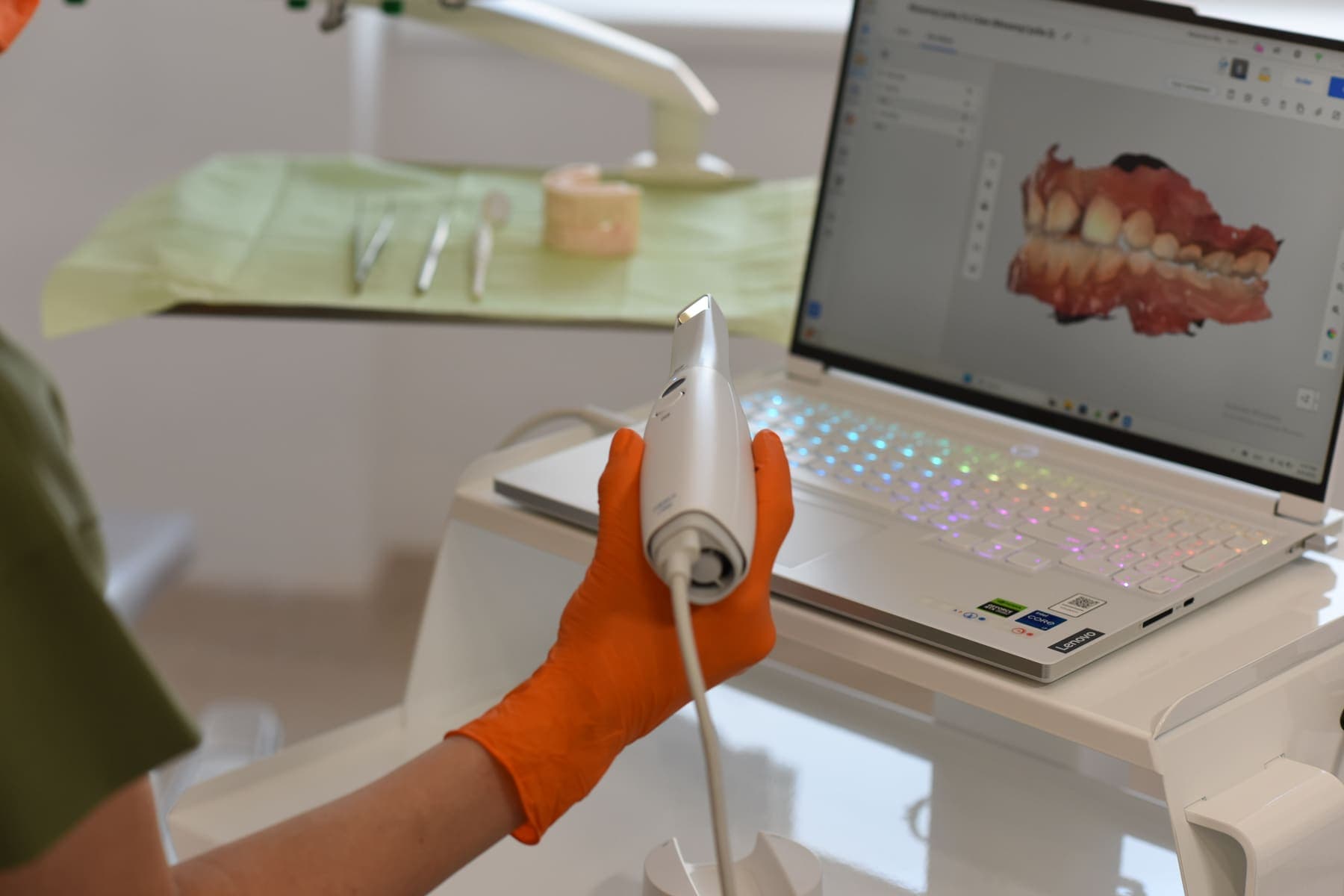
Orthodontics corrects the position of the teeth and the bite, for children, adolescents and adults. Which appliance you have depends on the complexity of the case and on how discreet you need it to be.
Crowded, crooked or widely spaced teeth cause problems with chewing, make cleaning harder and, over time, lead to gum disease. Orthodontic treatment aligns the teeth properly, improves how the mouth works, and contributes to a balanced, healthy smile.
Worth knowing: in Romania, close to one in three patients wearing braces is an adult, and treatment can begin even in your fifties or sixties, provided the teeth and gums are healthy. Clear aligners are the fastest-growing form of orthodontic treatment in the world.
Orthodontic treatment suits children, adolescents and adults alike. Age is not a limit, as long as the teeth and gums are healthy.
Fixed metal, ceramic and sapphire braces, and modern clear aligner systems. Which one you have depends on how complex the case is and on how visible you are willing for the treatment to be.
Twelve to twenty-four months on average. Simple cases can be quicker; complex ones take longer.
Not painful, though there can be mild and temporary discomfort, particularly at the start or after an adjustment. It usually passes within a few days.
You wear a retainer. This is not optional: it is what holds the teeth in their new position and stops them drifting back over the years.
Aligners can work, because the trays are made in advance and progress can be reviewed remotely between trips. Fixed braces need regular in-person adjustments, so they are only realistic if you are in the region often. We will tell you honestly which applies to your case.
Tell us what is troubling you and we will propose a treatment plan built around your case. We reply quickly on WhatsApp, in English.